Systems Thinking Overview
See how I uncover the operating logic of systems and surface it through interfaces, so that stakeholders can grasp the picture and operate intuitively to maintain governance and accountability.

IA Grammar, Not Just IA.
For BlueHour, an AIXITXHI operationalization layer for the organization, I turned the AI architecture into a ruleset that serves as a basis for transforming the dashboard's retrospective view of the past into a real-time operating system. By juxtaposing Phase × Mode × Module grammar, the system's governance can begin to address the speed gap between the human-in-the-loop and the pace of change.
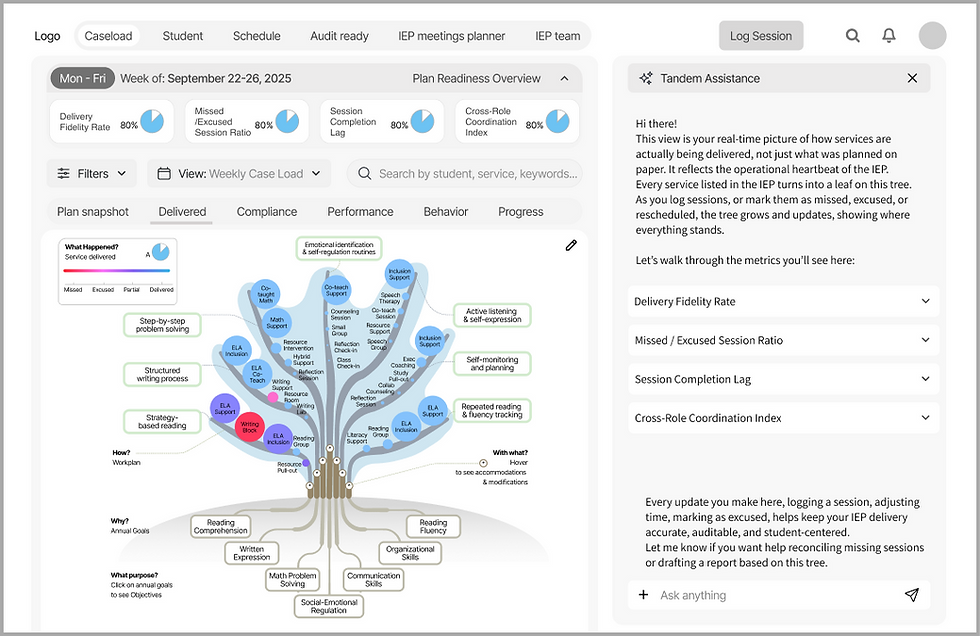
Designing for Cognition types, not for Features.
Cognitive load models are expressed as interaction logic. Through expert workshop discussions on an IEP-related platform, I discovered different cognitive modes prevalent in the IEP team, primarily visual thinking. Backed by research, I designed an A/B test to determine which thinking modes would be more efficient at alleviating cognitive load for an overloaded team.
Handout: go to 5:50

Execution-Time Intervention Design.
Having worked in SaaS for 5+ years, I distinguish between the classical dashboard and the advanced intervention layer conceived for BlueHour, which informed the entire premise that accountability must be structured into the moment of execution, not recovered retrospectively. That's a systems design claim, not a UI preference. See Vibe Coding and AI SaaS

Organizational Knowledge as a Design Artifact.
Keil Maritime - How I documented formal workflows and tribal knowledge in a maritime compliance organization to prepare the ground for automation. See Clickable Demo